Roof Leak Water Damage in West Yarmouth, MA
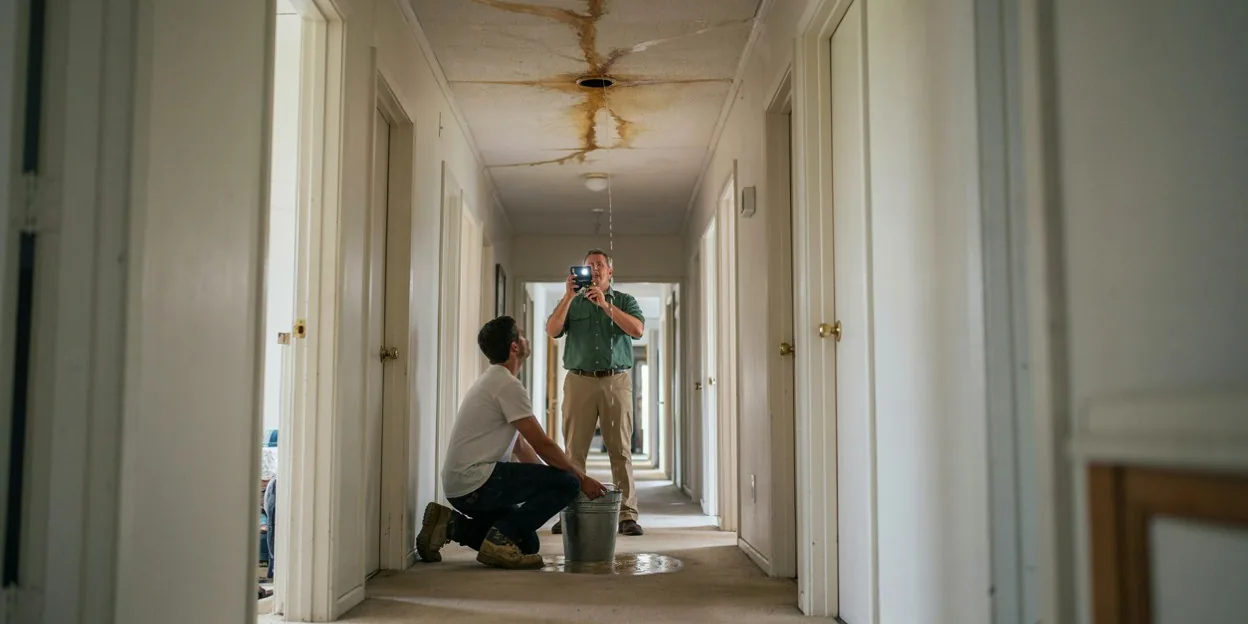
The nor'easter blew from the northeast for eighteen hours, and somewhere around midnight the ceiling in the upstairs bedroom of your Yarmouth Port Cape started to drip. By morning there is a brown ring the size of a table, the paint is bubbling, and the insulation in the knee wall is soaked. We put you on the phone with an independent local provider who handles roof leak water damage in Yarmouth and across Barnstable County.
What the crew does first
The crew traces the water from the stain back to where it came in. On a Cape that usually means the attic or the knee-wall space behind the upstairs bedrooms, where wind-driven rain came under the shingles or an ice dam backed melt water over the edge of the roof deck. They meter the ceiling, the insulation, the rafters, and the top of the wall below, because water that comes in at the ridge often ends up at the sill.
Then they pull the wet insulation, set air movers and dehumidifiers in the attic and the room below, and dry the ceiling and framing in place where they can. A sagging ceiling is dropped in a controlled way rather than left to fall. The roofer's job is to stop new water. The crew's job is the water that already came in, and the two often work the same week.
What to do in the next hour
Put a bucket under the drip and poke a small hole in the center of a bulging ceiling to let the water out before it spreads. Move furniture and rugs out from under the stain. If a light fixture is wet, turn off that circuit and leave it off.
Photograph the ceiling, the attic if you can reach it safely, and the outside of the roof from the ground. Do not go up on a wet roof. Note when the drip started and which way the wind was blowing. Then call a roofer for a tarp, and make the call to us.
What is usually saved and what is not
Rafters, roof decking, and ceiling joists usually dry in place. Blown-in or fiberglass insulation that got wet comes out, because it holds water against the framing and loses its value once it has been soaked. A stained plaster or drywall ceiling that is still firm can often be dried and repainted. A ceiling that has sagged or crumbled comes down.
Wall cavities below the leak are checked and dried, sometimes through small holes behind the trim. Wet belongings in the attic are handled as content restoration. Once the attic and ceiling are at target, the rest of the drying is structural drying.
Barnstable County notes
Cape roofs take weather from both directions. Nor'easters drive rain horizontally under shingles and into soffits and around chimneys, and the storms of January 4, 2018 and the three nor'easters of March 2018 tore shingles and siding off houses from Sandwich to Provincetown. Hurricane Bob in August 1991 pushed gusts past a hundred miles an hour in Brewster and North Truro and peeled roofs along the whole peninsula.
Winter adds ice dams. Capes and ranches from the 1950s and 1960s in Yarmouth, Dennis, and Harwich have low-pitched roofs, little attic insulation, and heat leaking up into the knee walls, so snow melts from underneath and refreezes at the cold eave. The dam backs water up under the shingles and into the wall. The December 2022 and February 2023 cold snaps followed by quick thaws produced exactly that pattern.
Salt air shortens the life of asphalt shingles and rusts flashing and nails faster than inland, so a roof that is twenty years old on the Cape can leak like a roof that is thirty years old off it. Many homeowner policies cover sudden storm damage and the water that came in with it. Long-term leaks from a worn roof often are not covered. Ask the crew to photograph the entry point and the wet insulation before it is removed.
Calling about roof leak water damage
Say where the stain is, whether the ceiling is sagging, and whether water is still dripping. Say whether a roofer has been out or a tarp is on, and whether the attic is finished or open. Mention if the house was empty when the storm hit. Call (508) 419-9161 now and tell us what you see.